
R E C E N S I O N E
Recensione di Aldo Pedron
(🇬🇧 For English translation click here)
Joe Ely nasce il 9 febbraio del 1947 ad Amarillo, Texas.
Passa i suoi anni formativi, dai 12 anni in su a Lubbock, sperduta cittadina texana. Finita la scuola nel 1970, con i suoi amici e musicisti locali di Lubbock, Jimmie Dale Gilmore (patito di country music), Butch Hancock (assai afferrato e introdotto nel mondo folk) e lo stesso Joe Ely (un tipo da rock and roll) formano The Flatlanders. Così nel 1972 The Flatlanders pubblicano il loro primo album, poi si sciolgono e un nuovo disco del trio delle meraviglie lo si vede e viene dato alle stampe nel nuovo millennio nel 2002. Ognuno va per la sua strada ed ognuno ha una propria brillante carriera da solista fino alla loro riunione più recente che li vede sui palchi di mezza America.
Il primo album solista di Joe Ely è del 1977. L’anno seguente con la sua band suona a Londra dove collabora con la punk band dei Clash, poi insieme si ritroveranno in tour negli Stati Uniti nel 1980. Nei decenni ’70 e ’80 Joe Ely realizza numerosi album (diversi, almeno 8 per la MCA), tutti di grande qualità artistica in virtù della sua anima di autentico rocker. Le sue esibizioni Live diventano leggendarie (e i suoi dischi dal vivo pure) così come i musicisti che si alterano nelle sue band (le chitarre infuocate di Jesse Taylor e David Grissom, la fisarmonica di Ponty Bone e/o Joel Guzman, le tastiere e pedal steel di Lloyd Maines, la chitarra flamenco di Teje Winterp, il basso di Glenn Fukunaga e Jimmy Pettit e un batterista spettacolare come Davis Mc Larty). Una discografia di una trentina di dischi, migliaia di chilometri macinati “on the road” per una carriera lungimirante ed intensa di oltre 50 anni!

Ogni decennio ha il suo marchio e l’album capolavoro di rock, country, honky-tonk, country-rock, rock and roll o canzoni di frontiera: Honky Tonk Masquerade (1978), Musta Notta Gotta Lotta (1981), Live At Liberty Lunch (1990), Letter To Laredo (1995), Live Cactus (2008). Nel nuovo millennio Joe Ely pubblica alcuni dischi per la sua etichetta Rack’Em Records. Nel 2008 dicevamo è la volta di un album fantastico, squisitamente acustico con Joe Ely (voce e chitarra) accompagnato da Joel Guzman alla fisarmonica inciso al Cactus Cafe di Austin, Texas, la capitale dello stato dove da anni risiede Joe Ely stesso.
Un artista schietto che dichiara in una sua canzone The Highway Is My Home (l’autostrada è la mia casa) a significare uno status esistenziale di perenne movimento in cui le migliaia di chilometri percorsi giorno dopo giorno non sanno solo di polvere e benzina, pianure e cieli sconfinati (come in Texas) ma rimandano alla tipica tradizione (on the road) americana e di rocker portando in giro la sua arte come lo hanno fatto Bruce Springsteen, Bob Seger, John “Cougar” Mellencamp, Steve Earle, Dwight Yoakam ed altri grandi artisti. Joe Ely è un cantautore elettrico, un artista eclettico, passionale, artefice di ballate epiche e notturne, illuminato dall’incandescenza del rock and roll e profondamente ispirato e innamorato da uno stato come il suo, il Texas.
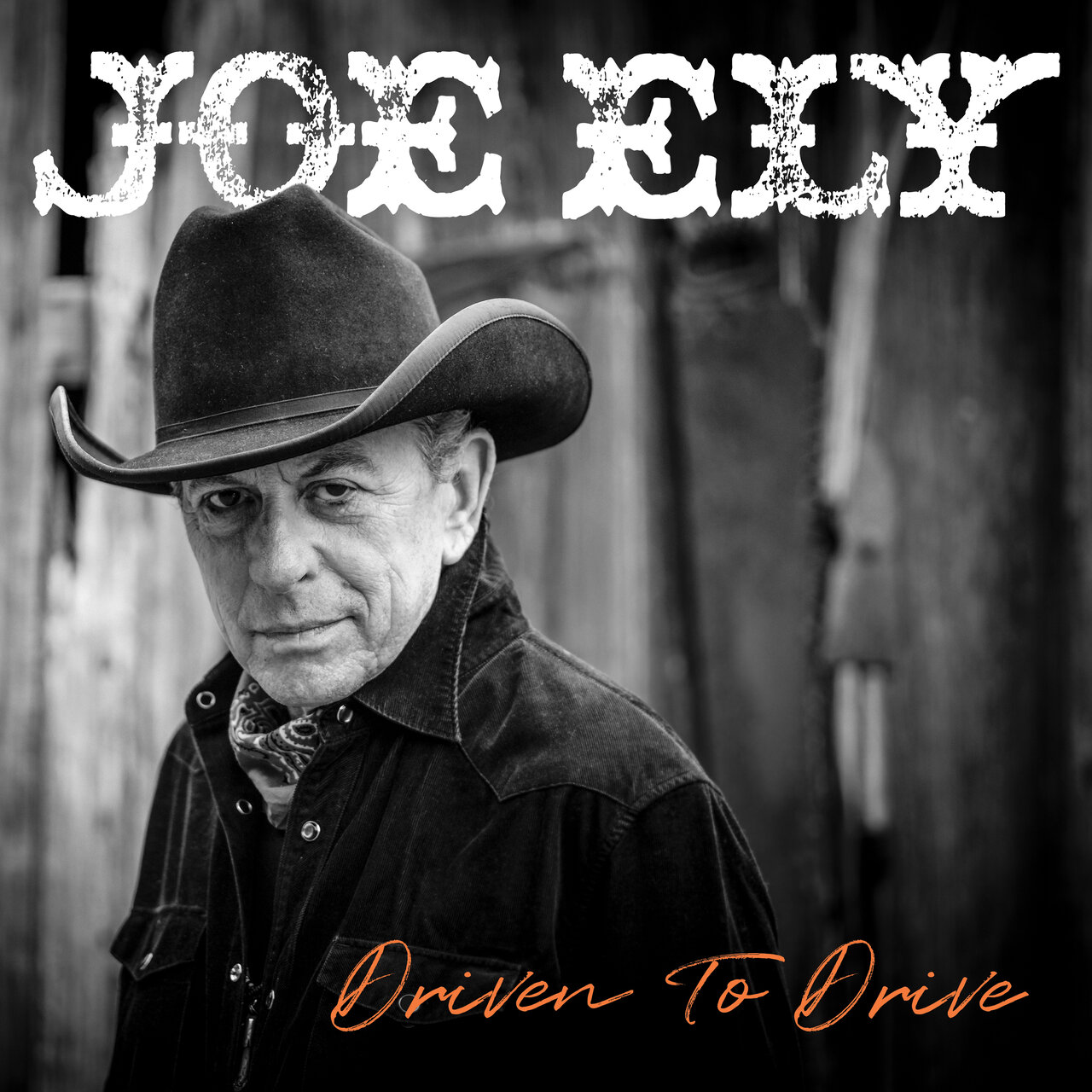
Nel 2024 è ancora una anima irrequieta e Driven To Drive è l’ennesimo disco del cuore, di conferma, riuscito nella sua quintessenza (disponibile in vinile, vinile colorato e CD). Lui lo definisce un disco da strada: «Ho viaggiato tutta la mia vita in cerca di quello che poi ho trovato e con tutto il lavoro visto dallo specchietto retrovisore. Ho percorso sentieri tracciati sempre alla ricerca di emozioni». Joe Ely possiede una voce emozionante che canta spesso canzoni di confine tra Texas e Messico, di grande forza epica, il piglio rock e suoni di chitarre graffianti. Composizioni introspettive, talvolta malinconiche, sublimi.
Una collezione di canzoni che ha scritto partendo dalla metà degli anni ’70, come un tornado in piena, nella parte occidentale del Texas, in una pianura chiamata Llano Estacado. Dicevamo negli anni ’70 e ’80 Joe Ely fronteggia una band leggendaria che ha successo ma da sempre definita “troppo rock per essere puro country e troppo country per essere vero rock” e partendo dal suo eroe di rock and roll Buddy Holly. Cercando nei suoi files, Joe Ely scopre di avere una manciata di canzoni scritte viaggiando e che aveva registrato in studio appena tornato a casa ma poi accantonate.
Driven to Drive (spinto a guidare) è un progetto realizzato da Joe Ely agli Spur Studios, nel suo studio di registrazione/ranch appena fuori Austin e con brani scritti in anni differenti (decadi diverse) con l’aiuto di musicisti come Joel Guzman (fisarmonica) suo amico e vicini di casa, il tastierista Bill Guinn, Eddie Beethoven (voce) e il violinista Richard Bowden. Poi lo scorso anno a The Zone di Dripping Springs, Texas, l’eccellente Jeff Plankenhorn ci ha aggiunto la sua chitarra a tre canzoni con l’aiuto dell’ingegnere del suono Pat Manske che ha masterizzato Driven To Drive aggiungendoci delle percussioni.
San Antonio Brawl è anomalo, inciso in una stanza dall’albergo, in un motel da qualche parte nell’Oklahoma quando Joe Ely aveva impilato i materassi contro le pareti e creato, immaginato e truccato il posto come se fosse un piccolo studio. Canzoni in movimento: auto, 16 ruote, moto e bus Greyhound, l’essenza dell’America on the road. Canzoni che vanno da un posto all’altro o in un posto qualunque. Giù il pedale a manetta, l’asfalto a due corsie e via scorrendo per tutta l’America, fiancheggiando le strade Interstate o la Highway 61 (da New Orleans a Chicago), l’autostrada del golfo e del blues.
Ci sono tre brani assai esplicativi con altrettanti video.
Odds Of The Blues è fenomenale, bellissima con Jesse Taylor alla chitarra e Lloyd Maynes alle tastiere e pedal steel e un duetto da pelle d’oca con Bruce Springsteen. Joe Ely aveva già avuto con lui l’amico Bruce Springsteen nel 1995 in due brani dell’album Letter To Laredo, ossia in All Just To Get To You e in I’m A Thousand Miles From Home. L’idea di Odds of The Blues dice Joe Ely «mi è venuta frequentando un locale notturno ai margini di East Lubbock chiamato TV’s… C’era sempre una partita a dadi nella stanza sul retro; il tavolo da biliardo aveva una pessima inclinazione; e il jukebox suonava soprattutto vecchie canzoni blues. Ho scritto la canzone più tardi, quando ho allestito il mio studio ad Austin. Di recente ho chiesto a Bruce se gli sarebbe piaciuto cantare con me in questa canzone e lui ha detto che gli sarebbe piaciuto. Siamo amici perduti da molto tempo. Uno dei miei ricordi di quando cantavamo insieme era a Dublino, in Irlanda, quando salimmo entrambi sul palco con Jerry Lee Lewis e Shane MacGowan e cantammo Great Balls of Fire».
Driven To Drive è dedicata a C.B. Stubblefield e il suo Stubbs BBQ (barbecue), una canzone “rock for truckers” adatta ai camionisti sulle strade infuocate e di viaggi lungo raggio! Christopher B. Stubb Stubblefield (1931-1995) è colui che nel 1968 aprì un bar Stubb’s Bar-B-Q a Lubbock con il giusto clima e amalgama di buona musica e buona cucina. Con il suo carisma Stubb riunì intorno a sé delle speciali jam session e Sunday Nights (jam session della domenica sera) in cui negli anni ’70 e ’80 parteciparono e suonarono tra gli altri in jam session: Terry Allen, Joe Ely, Johnny Cash, Jimmie Dale Gilmore, Tom T. Hall, B. B. King, Willie Nelson, Jesse “Guitar” Taylor, George Thorogood, Stevie Ray Vaughan, Muddy Waters, Smokey Joe Miller, Dee Purkeypile all’organo hammond B3 della house band locale e ancora varie formazioni di turno. “Stubb” saliva sul palco a cantare Summertime o The House of The Rising Sun e poi dava inizio allo spettacolo! Joe Ely e Tom T. Hall giocavano inoltre a bigliardo ispirando a quest’ultimo The Great East Broadway Onion Championship of 1978.
Didn’t We Robbie è invece un rock and roll / boogie-woogie scatenato con il pianoforte di Bill Ginn a ricordare i Clash (nel video) dal vivo e in tour in Texas con Joe Ely nel 1980 e le visite ad Alamo o Fort Alamo (la missione coloniale spagnola di San Antonio de Valero, fondata nel 1716 situata al centro di San Antonio, Texas, una missione a scopo religioso diventata fortificazione solo in seguito agli scontri fra statunitensi e messicani) e alla Lubbock High School. Ma il Robbie della canzone è un grande amico di Joe Ely di Lubbock. Il padre di Robbie era Bobby Layne (1926-1986, RIP), un grande giocatore di football americano, un quarterback per i Texas Longhorns. Bobby era un amico dei Rolling Stones mentre Robbie era anch’egli un giocatore di football per i Longhorns. Uno di quegli amici buontemponi, sempre allegro che non si scordano mai e che rappresentano i legami e tutte le forti amicizie consolidate di Joe Ely e della sua Lubbock.
L’iniziale Drivin’ Man è una ballata piena di pathos, la voce scintillante e vissuta di Joe Ely e il magnifico ed eccelso suono della fisarmonica di Joe Guzman in primo piano. For You Love è un rock granitico e la fisarmonica ancora in evidenza. Watchin’ Them Semis Rollè invece un blues nella migliore tradizione texana con il supporto della steel guitar a scandire il brano. Nashville Is A Catfish, l’ennesima ballata cullata dalla fisarmonica e da un mandolino.
In definitiva un album decisamente riuscito, con un ritrovato Joe Ely ai massimi livelli sia per la scrittura che per il gusto sopraffino di fare buona musica.
Tracklist:
- Drivin’ Man
- Odds Of the Blues
- For Your Love
- Watchin’ Them Semis Roll
- Didn’t We Robbie
- Nashville Is A Catfish
- Ride Motorcycle
- San Antone Brawl
- Slave To The Western Wind
- Gulf Coast Blues
- Driven to Drive
- Jackhammer Rock

English translation:
Joe Ely was born on February 9, 1947 in Amarillo, Texas.
He spent his formative years, from the age of 12 onwards in Lubbock, a remote Texan town. After finishing school in 1970, with his friends and local musicians from Lubbock, Jimmie Dale Gilmore (a country music fan), Butch Hancock (very well-connected and introduced to the folk world) and Joe Ely himself (a rock and roll guy) formed The Flatlanders. So in 1972 The Flatlanders released their first album, then they split up and a new album from the wonder trio can be seen and released in the new millennium in 2002. Each one goes their own way and each one has their own brilliant solo career until their most recent reunion that sees them on stages all over America.
Joe Ely’s first solo album was in 1977. The following year he played with his band in London where he collaborated with the punk band The Clash, then they met again on tour in the United States in 1980. In the 70s and 80s Joe Ely made numerous albums (several, at least 8 for MCA), all of great artistic quality by virtue of his soul as an authentic rocker. His live performances became legendary (and his live albums too) as did the musicians who changed in his bands (the fiery guitars of Jesse Taylor and David Grissom, the accordion of Ponty Bone and/or Joel Guzman, the keyboards and pedal steel of Lloyd Maines, the flamenco guitar of Teje Winterp, the bass of Glenn Fukunaga and Jimmy Pettit and a spectacular drummer like Davis Mc Larty). A discography of about thirty records, thousands of miles covered “on the road” for a far-sighted and intense career of over 50 years!
Every decade has its own trademark and masterpiece album of rock, country, honky-tonk, country-rock, rock and roll or frontier songs: Honky Tonk Masquerade (1978), Musta Notta Gotta Lotta (1981), Live At Liberty Lunch (1990), Letter To Laredo (1995), Live Cactus (2008). In the new millennium Joe Ely releases some records for his label Rack’Em Records. In 2008, as we were saying, it was the turn of a fantastic album, exquisitely acoustic with Joe Ely (vocals and guitar) accompanied by Joel Guzman on the accordion, recorded at the Cactus Cafe in Austin, Texas, the capital of the state where Joe Ely himself has lived for years.
An outspoken artist who declares in one of his songs The Highway Is My Home to mean an existential status of perpetual movement in which the thousands of miles traveled day after day do not only smell of dust and gasoline, plains and boundless skies (like in Texas) but refer to the typical American (on the road) tradition and of rockers taking their art around as Bruce Springsteen, Bob Seger, John “Cougar” Mellencamp, Steve Earle, Dwight Yoakam and other great artists did. Joe Ely is an electric singer-songwriter, an eclectic, passionate artist, creator of epic and nocturnal ballads, illuminated by the incandescence of rock and roll and deeply inspired and in love with a state like his, Texas.
In 2024 he is still a restless soul and Driven To Drive is yet another album of the heart, of confirmation, successful in its quintessence (available on vinyl, colored vinyl and CD). He defines it as a road album: «I’ve been traveling all my life in search of whatever I find, with all that roadwork in my rearview mirror, I’ve been taking stock of trail I blazed». Joe Ely has an exciting voice that often sings songs of the border between Texas and Mexico, of great epic strength, the rock attitude and the sounds of scratchy guitars. Introspective compositions, sometimes melancholic, sublime.
A collection of songs he wrote starting in the mid-70s, like a tornado in full, in the western part of Texas, in a plain called Llano Estacado. We were saying in the 70s and 80s Joe Ely fronts a legendary band that is successful but has always been defined as “too rock to be pure country and too country to be real rock” and starting from his rock and roll hero Buddy Holly. Searching his files, Joe Ely discovers he has a handful of songs written while traveling and that he had recorded in the studio as soon as he returned home but then put aside.
Driven to Drive is a project made by Joe Ely at Spur Studios, his ranch/recording studio just outside of Austin and with songs written in different years (different decades) with the help of musicians such as his friend and neighbor Joel Guzman (accordion), keyboardist Bill Guinn, Eddie Beethoven (vocals) and violinist Richard Bowden. Then last year at The Zone in Dripping Springs, Texas, the excellent Jeff Plankenhorn added his guitar to three songs with the help of engineer Pat Manske who mastered Driven to Drive and added percussion.
San Antonio Brawl is anomalous, recorded in a hotel room, in a motel somewhere in Oklahoma when Joe Ely had stacked mattresses against the walls and created, imagined and rigged the place as if it were a small studio. Songs in motion: cars, 16-wheelers, motorcycles and Greyhound buses, the essence of America on the road. Songs that go from one place to another or to any place. Pedal to the metal, two-lane asphalt and off we go, flowing across America, flanking the Interstates or Highway 61 (from New Orleans to Chicago), the Gulf and Blues highway.
There are three very explanatory songs with as many videos.
Odds Of The Blues is phenomenal, beautiful with Jesse Taylor on guitar and Lloyd Maynes on keyboards and pedal steel and a goosebumps duet with Bruce Springsteen. Joe Ely had already had his friend Bruce Springsteen with him in 1995 on two tracks from the album Letter To Laredo, namely in All Just To Get To You and in I’m A Thousand Miles From Home. The idea for Odds of The Blues says Joe Ely «came to me while hanging out at a nightclub on the edge of East Lubbock called TV’s… There was always a dice game going on in the back room; the pool table was really bad; and the jukebox was playing mostly old blues songs. I wrote the song later, when I set up my studio in Austin. I recently asked Bruce if he would like to sing with me on this song and he said he would. We are long lost friends. One of my memories of us singing together was in Dublin, Ireland, when we both got on stage with Jerry Lee Lewis and Shane MacGowan and sang Great Balls of Fire».
Driven To Drive is dedicated to C.B. Stubblefield and his Stubbs BBQ (barbecue), a “rock for truckers” song suitable for truckers on hot roads and long-distance travel! Christopher B. Stubb Stubblefield (1931-1995) is the one who in 1968 opened a Stubb’s Bar-B-Q in Lubbock with the right atmosphere and mix of good music and good food. With his charisma, Stubb gathered around him special jam sessions and Sunday Nights (Sunday evening jam sessions) in which in the 70s and 80s, among others, participated and played in jam sessions: Terry Allen, Joe Ely, Johnny Cash, Jimmie Dale Gilmore, Tom T. Hall, B. B. King, Willie Nelson, Jesse “Guitar” Taylor, George Thorogood, Stevie Ray Vaughan, Muddy Waters, Smokey Joe Miller, Dee Purkeypile on the Hammond B3 organ of the local house band and various other groups on duty. “Stubb” would come on stage to sing Summertime or The House of The Rising Sun and then start the show! Joe Ely and Tom T. Hall also played pool, inspiring the latter to The Great East Broadway Onion Championship of 1978.
Didn’t We Robbie is instead a wild rock and roll / boogie-woogie with Bill Ginn’s piano to remember the Clash (in the video) live and on tour in Texas with Joe Ely in 1980 and the visits to the Alamo or Fort Alamo (the Spanish colonial mission of San Antonio de Valero, founded in 1716 located in the center of San Antonio, Texas, a religious mission that became a fortification only following the clashes between Americans and Mexicans) and Lubbock High School. But the Robbie of the song is a great friend of Joe Ely from Lubbock. Robbie’s father was Bobby Layne (1926-1986, RIP), a great American football player, a quarterback for the Texas Longhorns. Bobby was a friend of the Rolling Stones while Robbie was also a football player for the Longhorns. One of those jolly, always cheerful friends that you never forget and that represent the bonds and all the strong friendships consolidated by Joe Ely and his Lubbock.
The opening track Drivin’ Man is a ballad full of pathos, Joe Ely’s sparkling and experienced voice and the magnificent and sublime sound of Joe Guzman’s accordion in the foreground. For You Love is a granitic rock and the accordion is still in evidence. Watchin’ Them Semis Roll is instead a blues in the best Texan tradition with the support of the steel guitar to mark the song. Nashville Is A Catfish, yet another ballad lulled by the accordion and a mandolin.
Ultimately a decidedly successful album, with a rediscovered Joe Ely at the top levels both for writing and for the exquisite taste of making good music.


Rispondi